 BoardFoot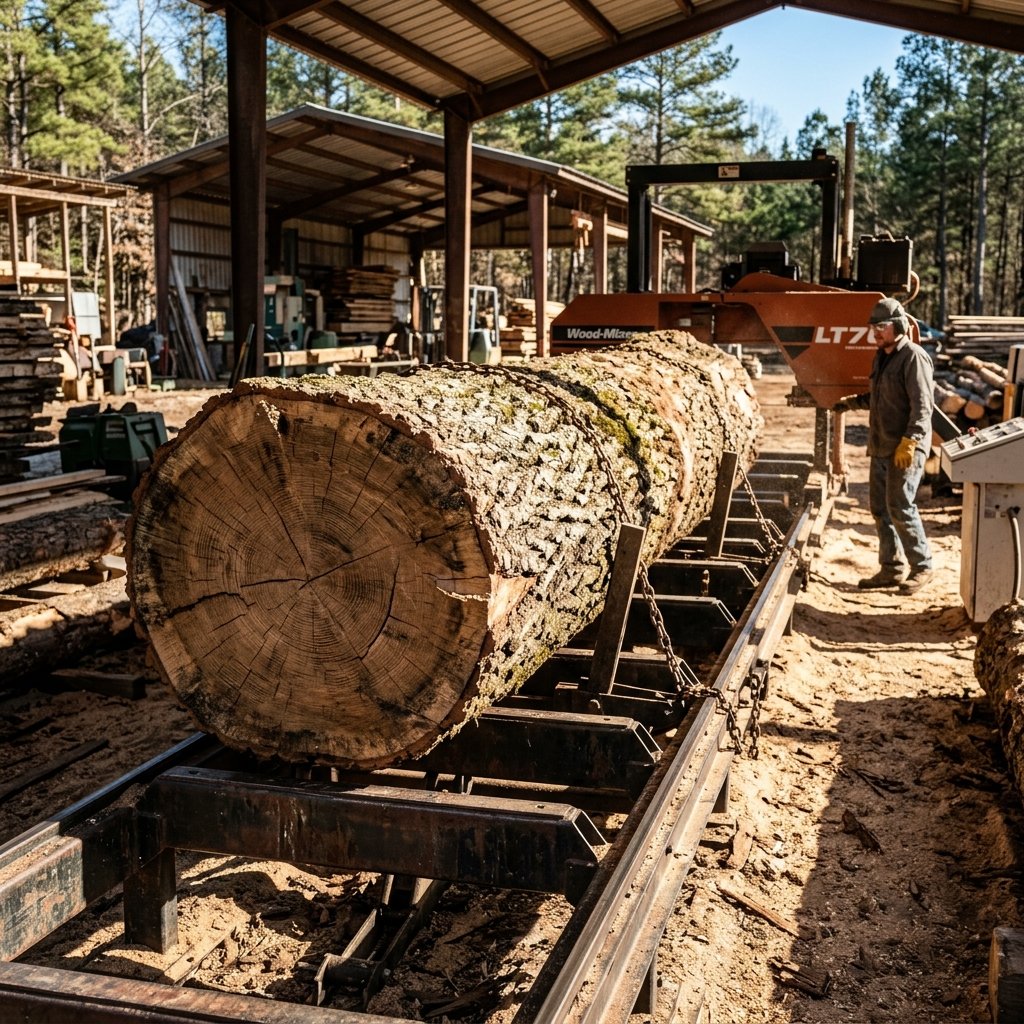
Log Scaling Rules: Doyle vs Scribner vs International
Before a tree becomes boards, it is measured as a log. In the USA, there are three primary "rules" used to estimate how many board feet of lumber can be recovered from a log. Depending on which rule you use, the "yield" can vary by as much as 25% for the same log.
Why Multiple Rules Exist
Scaling rules were developed in the 19th and early 20th centuries before modern thin-kerf saws existed. They were designed to protect the sawmill owner by conservative estimation. Today, these rules are still the legal language of the North American timber trade.
The "Big Three" Comparison
| Log Rule | Characteristics | Who Benefits? |
|---|---|---|
| Doyle Scale | Massive under-estimation on small logs. | The Sawmill (Buyer) |
| Scribner Decimal C | Diagram-based; accurate for medium logs. | Fair / Balanced |
| International 1/4" | The most mathematically accurate rule. | The Landowner (Seller) |
Deep Dive: The Doyle Rule
Doyle is the oldest and most widely used rule in the Midwest and South. It uses a very simple formula: ((D-4)/4)^2 × L. However, because it subtracts a flat 4 inches for "kerf and shrinkage," it heavily penalizes logs smaller than 20 inches in diameter. If you are selling small hardwood logs, avoid Doyle if possible.
Deep Dive: The International 1/4" Rule
This is the standard for modern forestry science. It accounts for a 1/4 inch saw kerf and logarithmic taper. If you have a highly efficient sawmill (like a Wood-Mizer bandsaw), your actual board foot yield (overrun) will closely match the International result.
How to Measure a Log
To get an accurate scale, you must measure the Small End Diameter (SED) inside the bark. Measuring the large end will give you a false high yield that the log cannot physically produce.
Professional FAQ
1. What is "Overrun"?
Overrun is when a sawmill produces more actual boards than the scaling rule predicted. Modern mills often see 10-20% overrun on Doyle estimates.
2. Which rule should I use to buy logs?
As a buyer, Doyle offers the most protection against defects and hidden rot.
3. Is length including the "trim allowance"?
Usually, logs are cut with 4-6 inches of extra length (the "over-length") which is not included in the scale calculation.
Maximize Your Mill Yield
Run the numbers on all three scales with our Log Scaling Tool.
Use our Log Yield Pro