 BoardFoot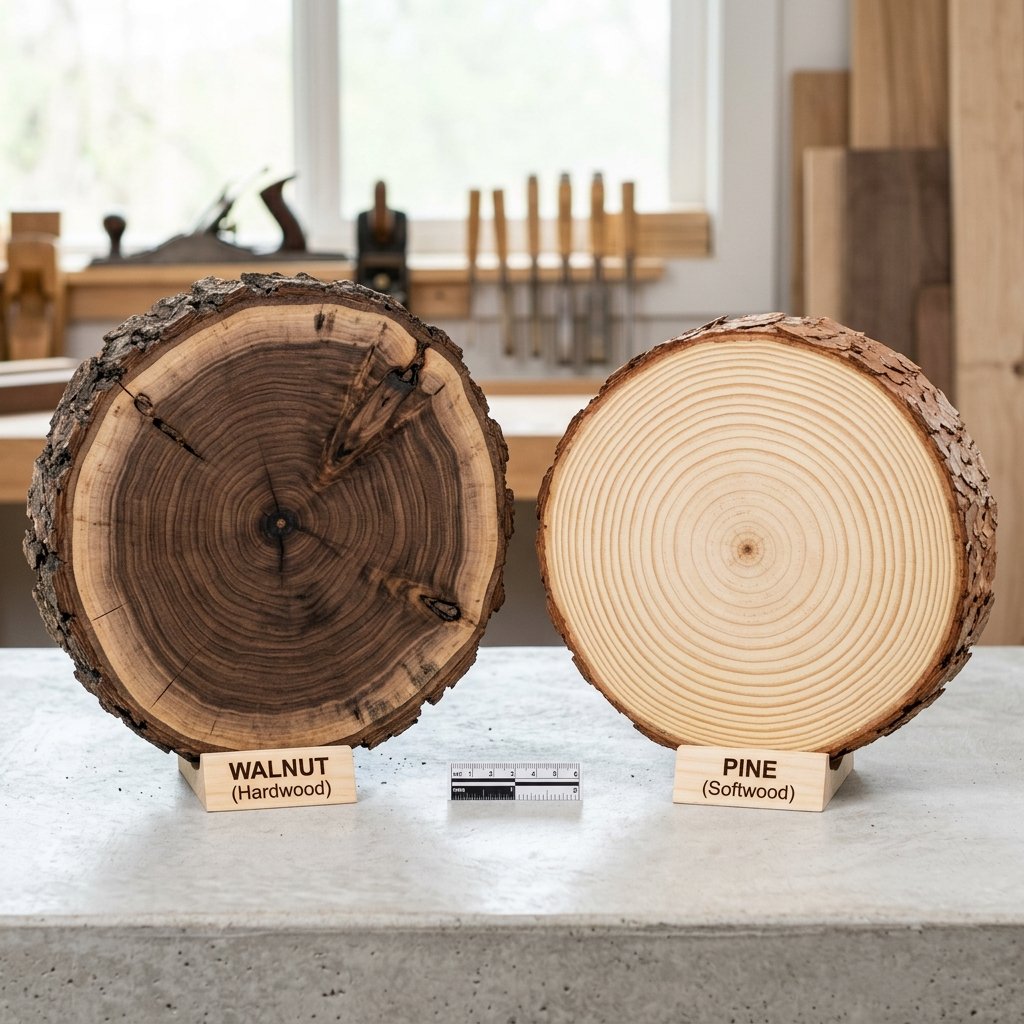
Hardwood vs Softwood Pricing Explained
Walk into the lumber yard and you'll find Pine for $2.50 per board foot, right next to Walnut for $15.00. Why is there such a massive discrepancy? The answer lies in biology, growth cycles, and market demand.
The Biological Distinction
Contrary to popular belief, "Hardwood" doesn't necessarily mean the wood is harder, and "Softwood" doesn't mean it's softer (though this is often true). The distinction is botanical:
- Hardwoods: Deciduous trees (Angiosperms) that lose their leaves and reproduce via enclosed seeds (fruit/nuts).
- Softwoods: Evergreens (Gymnosperms) that reproduce via exposed seeds, usually in cones.
Pricing Comparison Table
| Category | Softwood (Pine/Cedar) | Hardwood (Walnut/Oak) |
|---|---|---|
| Growth Rate | Fast (20-40 years) | Slow (60-100+ years) |
| Market Pricing | Low / Commodity | High / Luxury |
| Primary Use | Framing, Fencing, Trim | Furniture, Flooring, Slabs |
Why Hardwoods Cost More
There are three primary economic drivers that keep hardwood prices high:
- Supply & Scarcity: Hardwood trees take significantly longer to reach harvestable diameters. A saw-grade Walnut tree might not be ready for a century, while a Spruce can be harvested in 25 years.
- Processing Costs: Hardwoods are denser and more abrasive on saw blades and planers. Drying them in a kiln is a surgical process—dry them too fast, and the wood "case hardens" or splits.
- Waste Percentages: Softwoods are often grown in massive, straight plantations. Hardwoods are usually harvested from natural forests where branches and irregular trunk shapes lead to higher waste during milling.
Project Selection Guide
Choosing between the two depends on the intended lifespan and finish of your project:
Choose Softwood for: Outdoor decks (cedar), home framing (SPF), or "paint-grade" trim that doesn't need to show grain.
Choose Hardwood for: Heirloom furniture, high-traffic flooring, or statement pieces where the natural luster and pattern of the wood is the star.
Professional FAQ
1. Is Balsa wood a hardwood?
Yes, botanically it is a hardwood, despite being one of the lightest and softest woods in the world.
2. Can I use softwood for furniture?
Absolutely. Many "rustic" or farmhouse styles use Pine. Just be aware that it will dent and scratch much easier than Oak or Maple.
3. Which is better for outdoor use?
Specific softwoods like Western Red Cedar and hardwoods like Ipe or White Oak are naturally rot-resistant.
Calculate Your Yield
Accurately estimate board feet for any species, hard or soft.
Use our Board Foot Calculator