 BoardFoot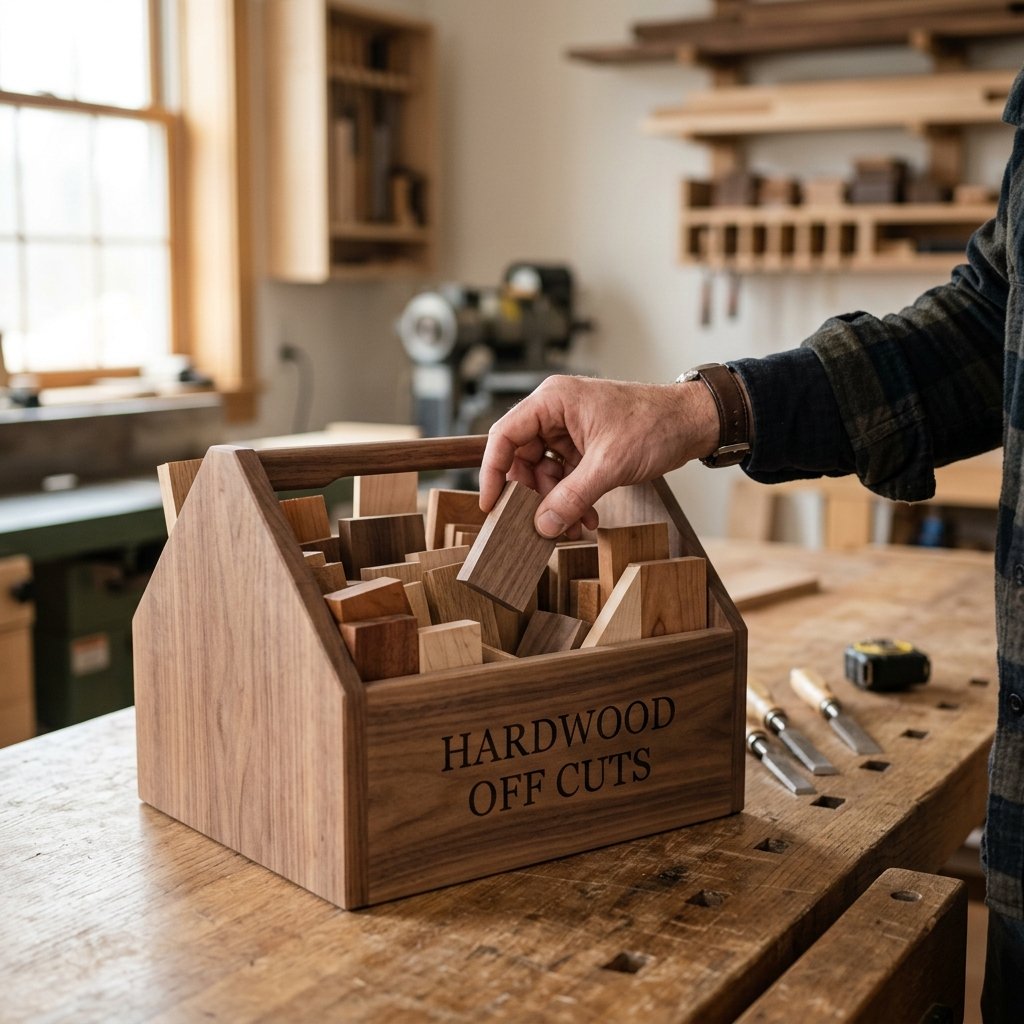
Reducing Wood Waste in Lumber Projects
When you pay $18.00 per board foot for high-grade Black Walnut, every shaving on the workshop floor is literally money out of your pocket. Professional woodworkers don't just "buy more wood"; they use specific techniques to maximize the fiber yield from every board.
The Sources of Waste
To reduce waste, you first need to identify where it happens. In most projects, waste comes from four specific areas:
- Saw Kerf: The 1/8 inch of wood turned into sawdust by every cut.
- Jointing & Planing: The material removed to flatten and square the lumber.
- Defect Removal: Cutting around knots, cracks (checking), and sapwood.
- Geometric Waste: The "offcuts" left over when a part doesn't fit perfectly into the length of a board.
Strategic Milling for Yield
Beginners often plane their entire boards to thickness before cutting parts. This is a massive mistake. Instead, follow the Rough Cutting First rule:
Cut your boards into rough lengths (about 1 inch longer than final) *before* you flatten them. A long, bowed board requires you to plane it very thin to get it flat. If you cut it into three short pieces first, the "bow" is minimized in each piece, allowing you to preserve more thickness.
The "Nested Case" Method
When laying out your project, use chalk to mark all your parts on the boards before a single cut is made. This is called "nesting." By rotating parts or fitting small parts in the negative spaces of large ones, you can often save 10-15% on your total board footage requirement.
Yield Optimization Matrix
| Strategy | Estimated Savings |
|---|---|
| Rough Cross-Cutting | 5% - 10% (preserved thickness) |
| Chalk Nesting | 8% - 12% (linear footage) |
| Secondary Defect Use | 5% (using knots in hidden areas) |
Professional FAQ
1. Should I use sapwood to save money?
In species like Walnut, sapwood is the white wood near the bark. It is structurally sound but visually different. For drawers or backs, using sapwood is a great way to reduce "aesthetic waste."
2. What is a "Secondary Wood"?
Furniture makers often use cheaper "secondary" woods like Poplar or Pine for internal parts that aren't visible, like drawer sides, to save expensive hardwoods for the "primary" surfaces.
3. Is thin-kerf saw better?
Yes. A thin-kerf blade (3/32") removes 25% less wood per cut than a standard 1/8" blade, which adds up significantly on large projects.
Optimize Your Material Order
Calculate the exact volume you need and apply professional waste factors.
Use our Board Foot Calculator